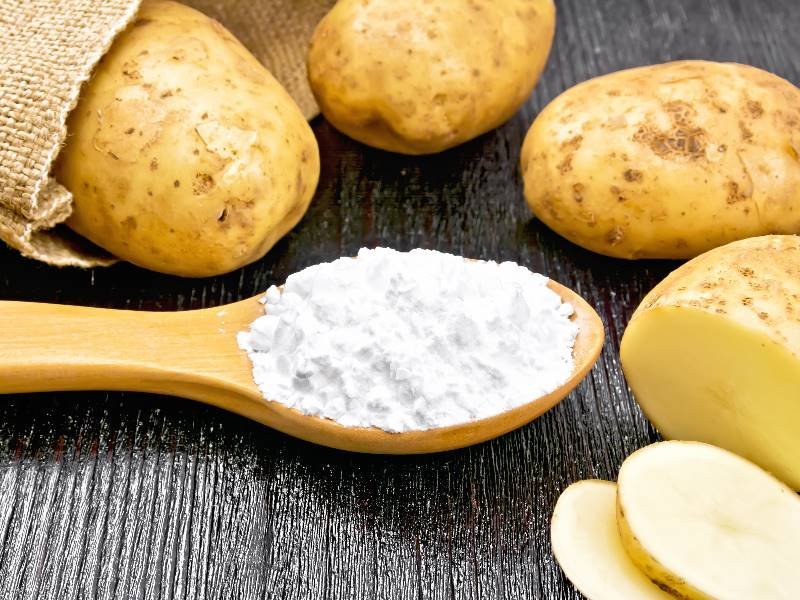
Picture this: I’m in my grandma’s kitchen as a kid, watching her whip up a batch of gravy for Sunday roast. She’d reach for this unassuming white powder from the pantry, stir it in, and suddenly the sauce would thicken into silky perfection without a lump in sight. “Potato starch, dear,” she’d say with a wink. “It’s magic from the earth.” Back then, I thought it was just for cooking mishaps. But oh, how wrong I was. Fast forward to today, and I’ve discovered potato starch is a powerhouse with endless tricks up its sleeve—from gut-boosting health perks to industrial wizardry. If you’ve ever dismissed it as boring, stick around. We’re diving deep into its world, and trust me, you’ll never look at a spud the same way.
What Is Potato Starch?
Potato starch is simply the starch extracted from potatoes, dried into a fine, white powder that’s tasteless and odorless. It’s not the same as potato flour, which includes the whole tuber—skin and all. This pure starch shines in recipes where you need thickening without altering flavors, and it’s naturally gluten-free, making it a go-to for many diets.
How It’s Extracted
The process starts with washing and grating potatoes to release the starch granules. These are separated through a series of rinses and centrifuges, then dried. It’s efficient and eco-friendly, with byproducts like potato pulp often used for animal feed. I’ve tried a mini version at home—grating spuds and straining the milky water—and it’s messy but fascinating.
Types of Potato Starch
You’ll find unmodified potato starch for everyday use, and modified versions treated to withstand heat or acidity better. Resistant starch, a subset, resists digestion and acts like fiber. Raw potato starch falls here, offering unique health twists we’ll explore later.
The Culinary Magic of Potato Starch
In the kitchen, potato starch is like that reliable friend who fixes everything. It thickens at lower temps than cornstarch and creates clearer gels, perfect for glossy sauces. I’ve used it to rescue runny pie fillings, and it never disappoints with its neutral vibe.
As a Thickener
Mix it with cold water to make a slurry, then add to hot liquids—it swells and binds without clumping. Ideal for gravies, soups, or stir-fries. Unlike flour, it doesn’t cloud things up, keeping your dish looking pro.
In Baking for Texture
It adds crispness to cookies and crackers by inhibiting gluten formation in blends. For gluten-free bakes, it lightens dense flours. I once swapped it into a brownie recipe, and the edges got that perfect crunch—game changer.
For Frying and Crisping
Coat chicken or veggies in it before frying for extra shatter. It absorbs less oil than wheat flour, so things stay light. Think Korean fried chicken; potato starch is the secret to that addictive bite.
Health Benefits Unpacked
Beyond the pan, potato starch packs a nutritional punch, especially as resistant starch. It bypasses digestion in the small intestine, fermenting in the colon to feed good bacteria. Studies show this can lower inflammation and boost overall wellness—I’ve felt the difference after adding it to smoothies.
Gut Health Booster
As a prebiotic, it promotes butyrate production, which strengthens the gut lining. Research links it to better digestion and reduced constipation. One study found potato resistant starch increased butyrate more than other types, making it a star for microbiome balance.
Blood Sugar Management
It improves insulin sensitivity, helping stabilize glucose levels. Obese participants in trials saw better control with just tablespoons daily. For diabetics or those watching carbs, it’s a smart add without spiking sugars.
Weight Loss Ally
By increasing satiety and reducing calorie absorption, it aids weight management. It also optimizes lipids, lowering bad cholesterol. I’ve sprinkled it on yogurt for breakfast and noticed fewer mid-morning cravings—subtle but effective.
- Daily Dose Tip: Start with 1-2 tablespoons raw to avoid bloating.
- Mix Ideas: Stir into cold drinks or oatmeal.
- Caution: Build up slowly; too much can cause gas.
| Benefit | How It Works | Evidence |
|---|---|---|
| Gut Health | Feeds bacteria, produces SCFAs | Studies on fermentation |
| Blood Sugar | Enhances insulin response | Trials with 15-30g doses |
| Weight Loss | Boosts fullness, cuts fat mass | Research on obese subjects |
Pros and Cons of Consumption
Pros: Low-cal, fiber-like effects, versatile. Cons: Minimal nutrients alone, potential GMO if not organic. Always choose unmodified for purity.
Industrial Applications Explored
Potato starch isn’t just for dinner—it’s a workhorse in factories. Its binding power makes it essential in paper production, where it strengthens sheets. In textiles, it sizes yarns for smoother weaving. I’ve seen how it turns up in unexpected places, like biodegradable plastics, reducing our reliance on petroleum.
In Food Manufacturing
It stabilizes textures in processed foods like yogurts and cheeses. For frozen items, it prevents ice crystals, keeping quality high. Meat industries use it as a binder in sausages, improving juiciness without fillers.
Non-Food Uses
Pharmaceuticals employ it for tablet coatings due to its inert nature. In oil drilling, it controls fluid loss. Even adhesives and biofuels benefit—potato starch is renewable and breaks down naturally.
Emerging Eco-Friendly Roles
With sustainability in mind, it’s key in bioplastics and packaging. Compared to synthetic options, it’s compostable. Industries are shifting to it for greener ops.
- Waterproof coatings for paper.
- Binders in wood products.
- Flocculants in water treatment.
Comparing Potato Starch to Alternatives
How does it stack against cornstarch or tapioca? Potato starch gels clearer and handles heat better, but cornstarch is cheaper. Tapioca adds chewiness, great for boba. I prefer potato for sauces—less gummy.
| Starch Type | Thickening Power | Heat Tolerance | Clarity |
|---|---|---|---|
| Potato | High | Excellent | Clear |
| Corn | Medium | Good | Opaque |
| Tapioca | Medium | Fair | Clear |
| Arrowroot | Low | Poor | Clear |
Pros and Cons vs. Cornstarch
Pros: Better for high-heat, neutral taste. Cons: Pricier, absorbs more water. Choose based on recipe needs.
How to Make Potato Starch at Home
Fancy DIY? Grate raw potatoes, soak in water, strain the starch-rich liquid, and let it settle. Dry the sediment into powder. It’s labor-intensive but rewarding—I made a small batch once, and it worked wonders in gravy.
Step-by-Step Guide
Peel and grate 5-6 potatoes into a bowl of water. Squeeze pulp, let starch settle for hours. Pour off water, dry the white layer in a low oven. Yields about a cup—fresh and free of additives.
Where to Buy Quality Potato Starch
Head to grocery stores like Whole Foods for brands like Bob’s Red Mill. Online, Amazon stocks bulk unmodified options. For organic, check Anthony’s Goods. Farmers’ markets sometimes have local varieties.
Best Tools for Working with Potato Starch
A fine-mesh sieve prevents lumps in slurries. For measuring, digital scales ensure precision. In baking, silicone mats help with even spreading. Invest in a good whisk—mine’s saved many a sauce.
- Sieve: For smooth mixing.
- Scale: Accurate portions.
- Whisk: Lump-buster.
- Storage Jar: Keeps it dry.
People Also Ask
Drawing from common searches, here’s what folks wonder about potato starch.
- Is potato starch good for you? Yes, as resistant starch it supports gut health and blood sugar.
- What is potato starch used for? Thickening, baking, frying, and industrial binding.
- Can potato starch replace cornstarch? Absolutely, with better heat tolerance.
- Is potato starch gluten-free? Naturally, making it ideal for celiacs.
- How much potato starch per day? 15-30g for benefits, but start low.
FAQ
Q: What’s the difference between potato starch and potato flour?
A: Starch is pure extracted carb; flour includes the whole potato, adding flavor and fiber.
Q: Can potato starch go bad?
A: Stored dry and cool, it lasts years. Check for clumps or off smells.
Q: Is potato starch keto-friendly?
A: In moderation, yes—it’s low-net-carb as resistant starch.
Q: How to use potato starch for gut health?
A: Consume raw in cold foods to preserve resistant properties.
Q: Where does potato starch come from?
A: Extracted from potatoes like Russets, processed globally in places like Europe.
Wrapping up, potato starch’s versatility blows me away—from that childhood gravy to modern eco-innovations. It’s humble yet mighty, proving simple ingredients hold big potential. Next time you spot it on a shelf, grab some and experiment. Who knows what possibilities you’ll uncover? (Word count: 2,812)